Eggleston, Shore, and Me
I'm not sure why I like what I like.
For example:
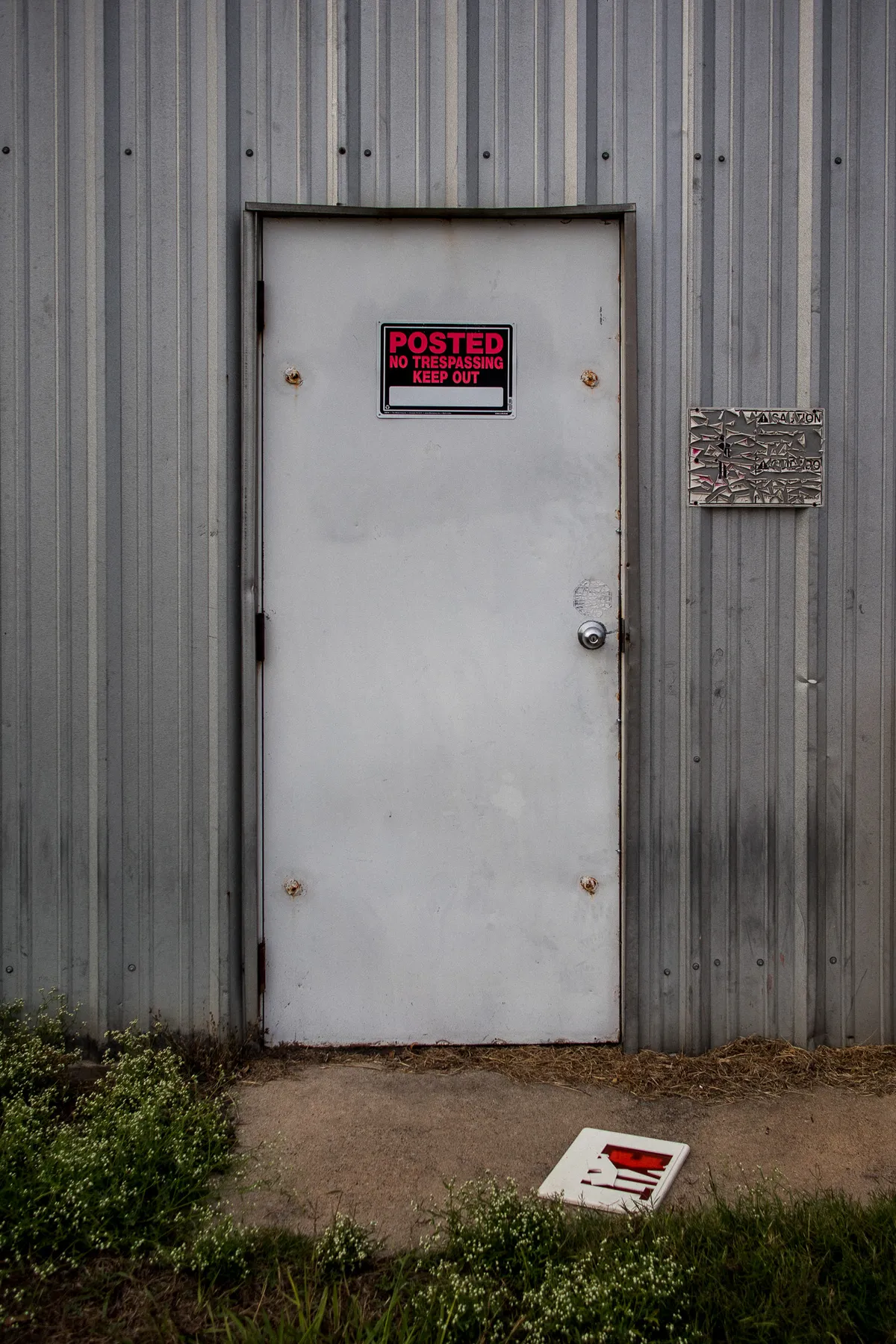 Posted, McKinney TX.
Yesterday I explored McKinney, Texas, another small town turning into a wealthy Dallas suburb, and sniffed out this abandoned warehouse. The exit sign has been out in the weather so long that its adhesive gave up, and nobody has come by to pick it up.
Or this, at the same abandoned factory:
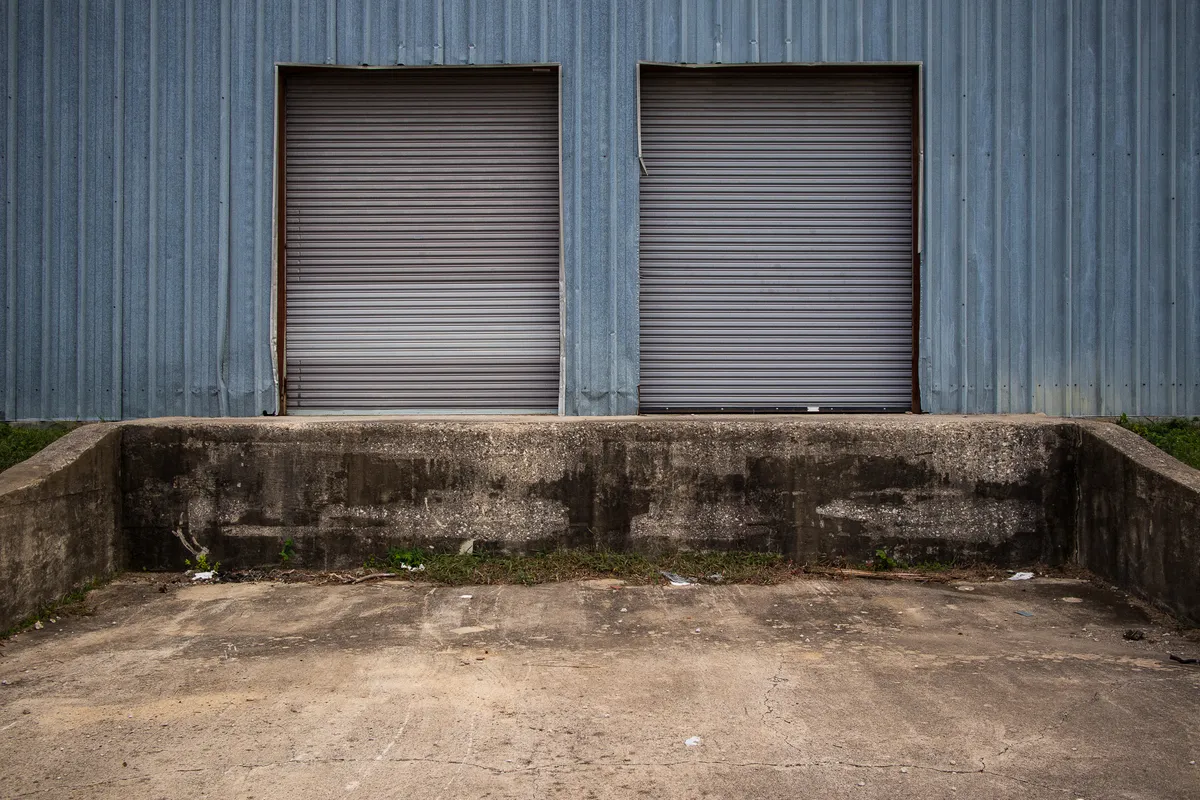 Loading Docks, McKinney TX.
There's something about the symmetry, the blankness, the lack of use. It feels like an archaeological find.
AI helped me put a name to what I'm doing: documentary formalism. Basically, I notice classical structure in ordinary things. It traces back to two of my favorite photographers, William Eggleston and Stephen Shore. Their pictures are looser and busier than mine, but the influence is there.
Here's one of Eggleston's most famous photographs:
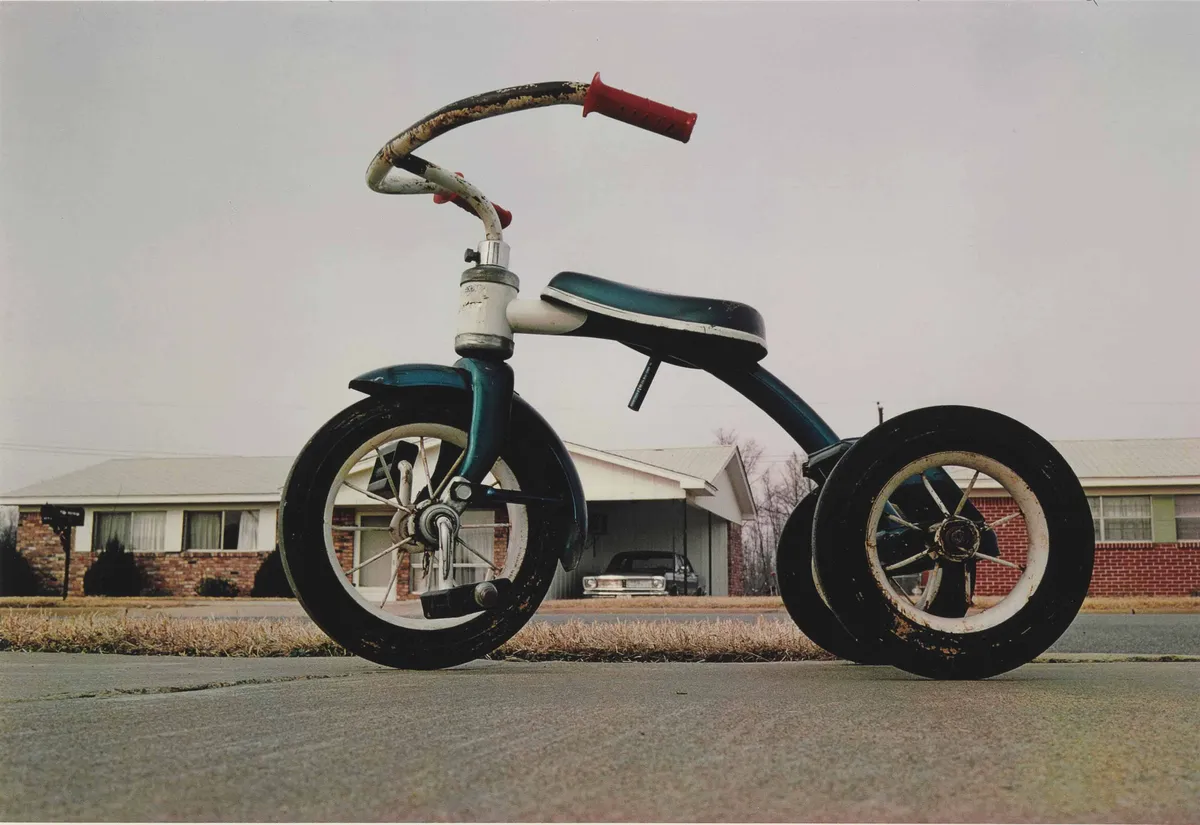 Untitled, Memphis.
And one of Shore's:
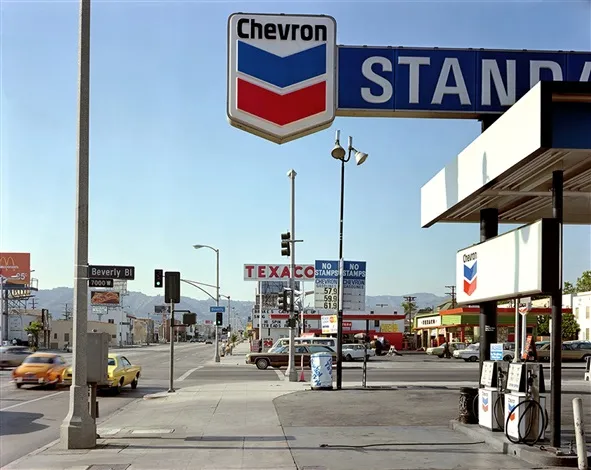 Beverly Boulevard and LaBrea Avenue, Los Angeles, California, June 21, 1975.
One big difference between my work and theirs: I have tools that make corrections easy.
Eggleston shot 35mm film, mostly on Leica rangefinders, and usually took just one frame of a subject, which kept his approach quick and casual. His printing was anything but casual. He used dye transfer, a difficult, expensive process made mostly for advertising, and worked closely with master printers to get the color right.
Shore used a Deardorff, a wooden view camera designed in the 1920s that takes 8×10-inch sheets of film and lives on a tripod. Its adjustable front and back let him square up buildings right in the camera, which is why his street corners look so straight.
I try to compose in the camera, as they did. Then I use Lightroom to:
- straighten the image if it's slightly crooked
- remove minor bits of trash
- correct the skew you get from a wide-angle lens up close
- lightly adjust color and contrast while keeping it realistic
I hate the HDR look.
I don't think either of them was a purist who refused to edit. They just did their editing in different places. Shore did his in the camera, with those adjustable standards. Eggleston did his in the darkroom, through dye transfer. I do mine in software.
Here's an example: my raw shot of the door with the posted sign.
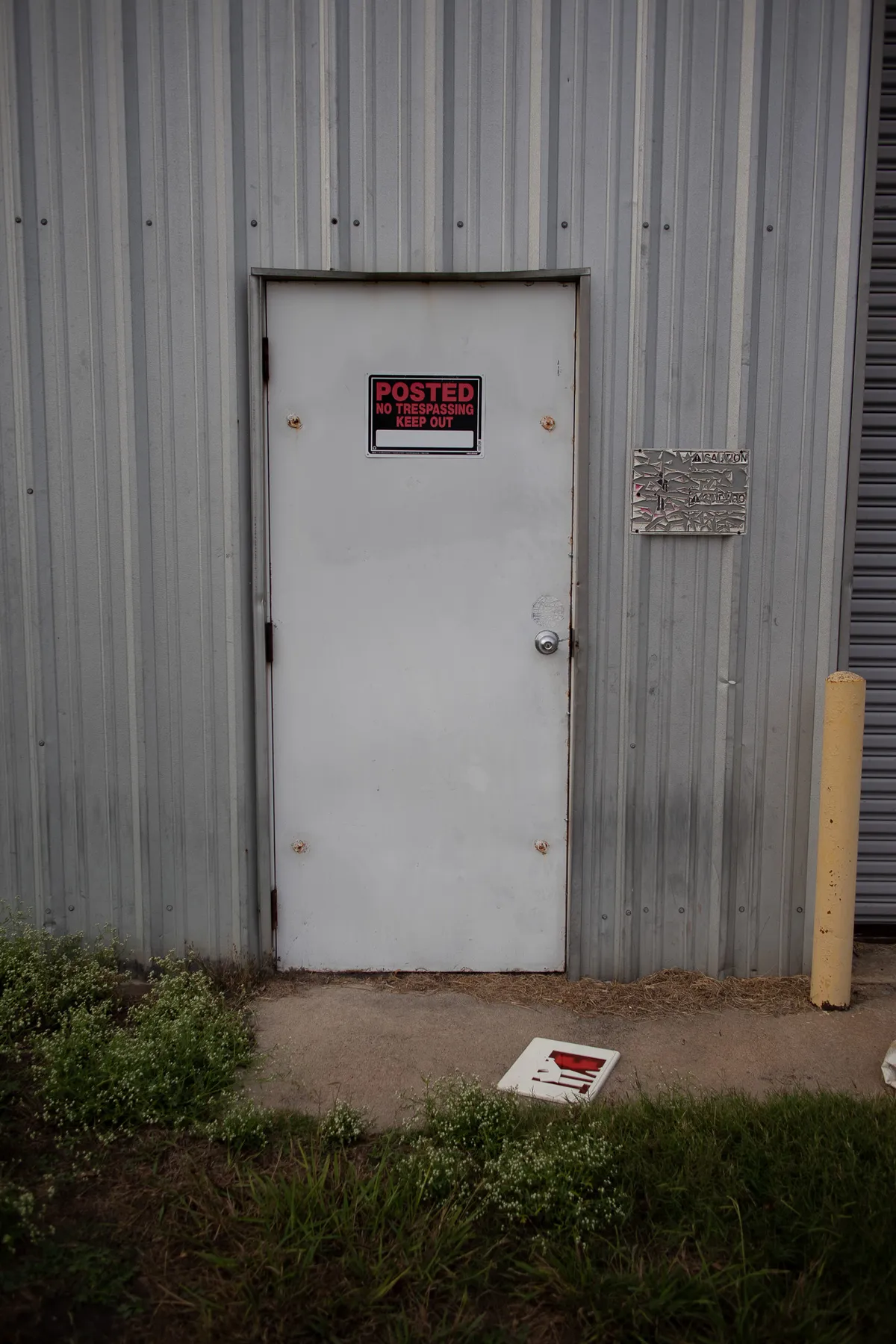 Raw File for "Posted, McKinney TX."
I always shoot a little wider than I need, because skew correction trims the edges. To get that flat-on look without correcting it afterward, I'd have needed a telephoto lens from 30 feet back, which sometimes puts me in the middle of the street. Pass.
I still don’t know why I like what I like. But I know it when I see it, and I know where to stand.