Why I Keep Photographing the Same Truck
I’ve been studying and practicing photography for five years now. It took me that long to get past the gear, the novelty, and the early obsession with style. Only recently have I understood what photography actually is at its core: intentionality.
The best photographs I’ve made came from revisiting the same subjects over and over and noticing something new each time. The subjects didn’t change — I did. There’s a rusted‑out 1952 Ford F-5 in Crossroads, Texas that I’ve photographed half a dozen times across as many years. It’s not going anywhere. My best frame of it is the most recent one, from May 2025:
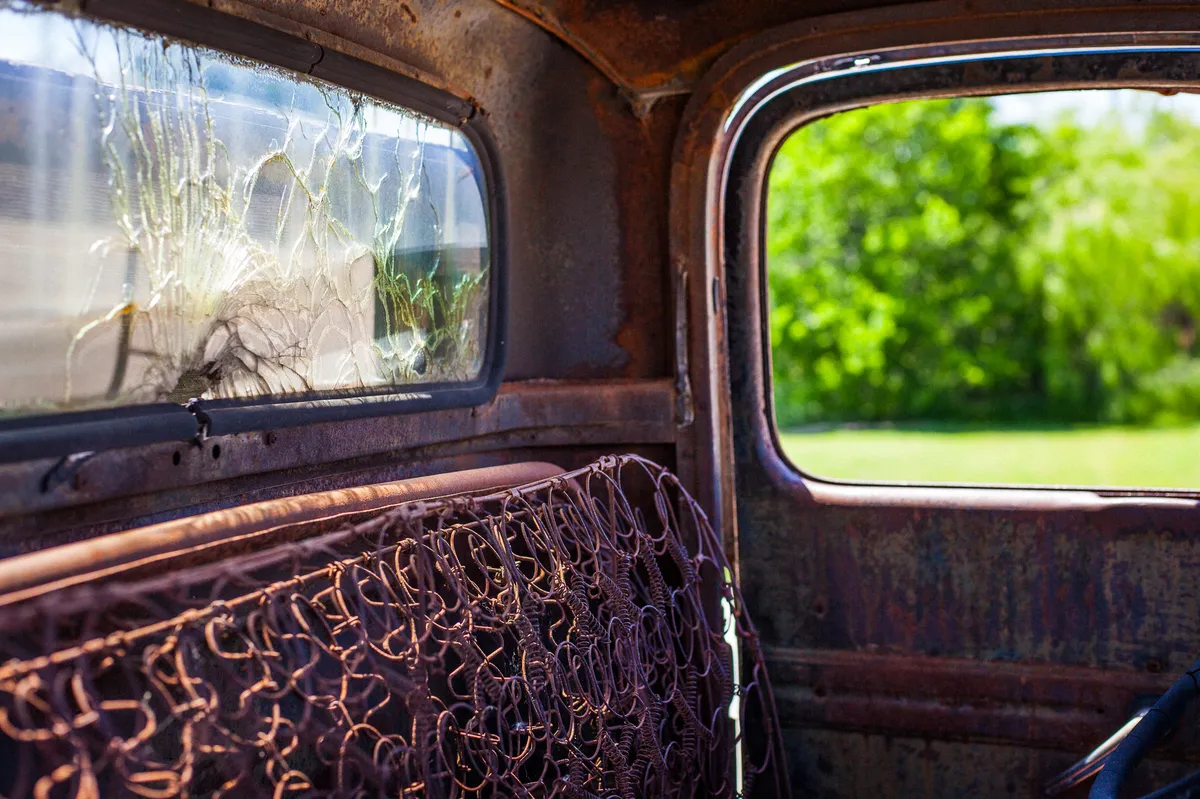
And the funny thing is, there’s probably another good photo waiting there. I realized that just as I wrote this: I need to go back with a wide‑angle lens, sit in the driver’s seat, and shoot the interior from that perspective. Suddenly, I’m excited again. That spark — the moment you see a familiar thing with unfamiliar eyes — is the whole point for me.
Other genres work differently. Street, wildlife, sports — their art is about catching an instant that will never exist again. Mine is about returning to the same place until I finally understand what I’m looking at. Different instincts, same tools.
That’s why AI image generation, even when it looks photographic, isn’t photography. There’s no intentionality behind the lens, because there is no lens. There’s only a prompt. The result may resemble a photograph, but it doesn’t come from the act of seeing.
Over time I’ve drifted into a style that feels natural: a straightforward perspective (usually around 50mm), a bit of subject isolation (often f/4 in good light), and color. I spent a year shooting only black and white — a useful discipline — but it wasn’t where I ultimately landed. In the early years, when I was experimenting with every lens and angle I could find, the message behind the images was basically, “Look at this cool shot I made.” Now I’m trying to say, “Look at this beautiful thing I noticed.” One is about the photographer. The other is about the subject.
Some artists never make that shift. I’m glad I did.